
Every figure below includes travel, professional table, warmed oils, and fresh single-use linens. One card citywide — no area premiums, no setup charges.
Therapeutic Massage Dubai
What Therapeutic Massage Is
Therapeutic massage starts with the problem rather than the technique. Instead of booking a named style and hoping it suits, you describe what’s wrong and the therapist selects the approach — deep tissue for adhesions, trigger point work for referral pain, myofascial release for restriction, gentler work where tissue is reactive. Sessions typically run as a short course rather than one visit, with each one building on what the last found. The goal is measurable change in how you move and feel, not an hour of pleasant sensation.
- Problem first, technique second
- Assessment leads every session
- Courses, not single visits
- Measurable change, not sensation
Why Book It At Home
Treatment courses only work if you actually complete them.
Courses Get Finished
Weekly attendance collapses when it means traffic and parking. At home the session happens because nothing has to be arranged.
Rest Follows Treatment
Therapeutic work asks something of the body. Lying down immediately afterwards consolidates it far better than driving does.
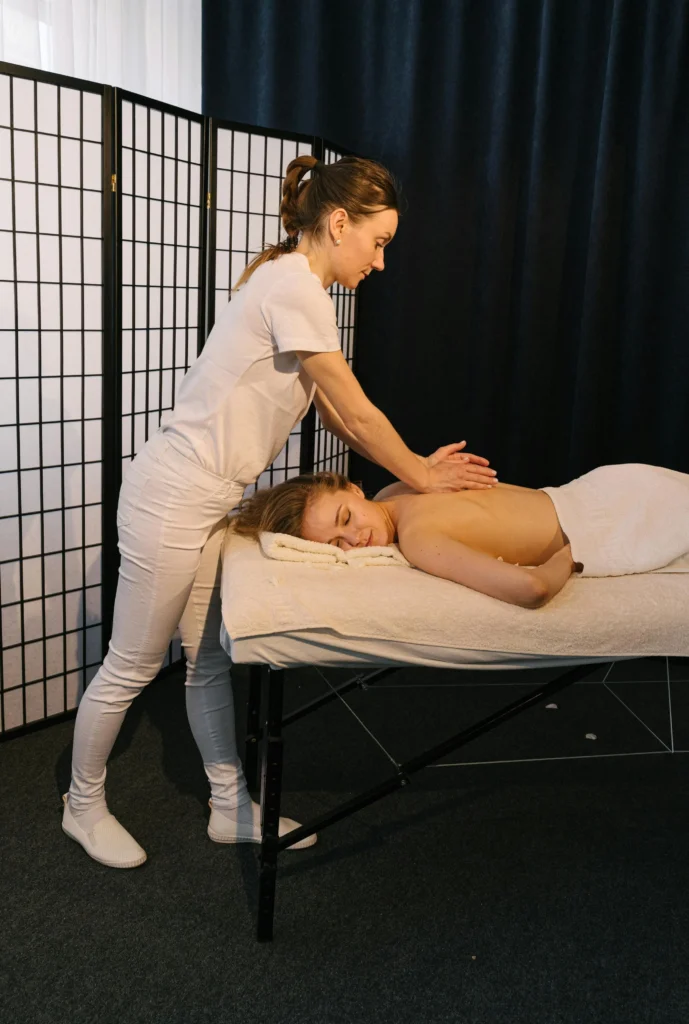
Progress Is Tracked
The same therapist in the same room notices change more accurately than rotating practitioners in a clinic ever could.
Flare Days Are Covered
The days you most need treatment are the days leaving home is hardest. Those are precisely the days we still reach you.
Who This Service Fits Best
People With A Specific Ongoing Problem
- Anyone whose tightness returns within days repeatedly
- People whose relaxation massages never actually changed anything
- Those with a problem area lasting several months
- Anyone told their pain is muscular rather than structural
- People wanting progress tracked rather than an hour
- Clients who prefer a plan over guesswork
People Working Alongside Other Care
- Anyone supplementing physiotherapy with regular soft-tissue work
- Clients following a doctor's advice to try massage
- People maintaining gains between clinical appointments elsewhere
- Athletes managing a recurring niggle through the season
- Desk workers whose posture problems keep quietly worsening
- Anyone returning to activity after a long break
Conditions It Helps With
Recurring Muscular Adhesions
Knots that reform within days need repeated targeted work. Course-based treatment addresses the pattern rather than the symptom.
Trigger Points With Referral Pain
Tight points that send pain elsewhere respond to sustained pressure. Locating them accurately matters more than working hard.
Myofascial Restriction
Tissue that has lost glide feels tight rather than sore. Slow sustained release restores movement pressure alone cannot.
Postural Compensation Patterns
One tight region pulls others into positions they then complain about. Treating the chain outperforms treating the loudest area.
Long-Standing Chronic Tightness
Months-old tightness rarely resolves in a single session. Progressive courses shift what one-off appointments never manage.
Reduced Range Of Movement
Restricted rotation, reach or bend usually has soft-tissue causes. Combined release and mobilisation frequently restore it measurably.
What therapeutic massage does not do
01
It does not diagnose your condition
Assessment guides treatment, not diagnosis. Unexplained or worsening pain needs proper medical investigation.
See first: A qualified doctor
02
It does not replace physiotherapy
Rehab requires structured loading and exercise. Massage supports that work rather than substituting for it.
See first: Physiotherapist
03
It does not treat structural damage
Discs, nerves, tears and joint damage need clinical care, not soft-tissue therapy.
See first: Clinical medical care
04
Single sessions rarely fix anything
Chronic patterns took months to build. Expect a course, not a cure in one hour.
Plan for: A course of sessions
Pricing
- 60-Minute Assessment Session AED 310–410
First session, problem mapped properly.
- 60-Minute Treatment Session AED 299–400
Standard follow-up, targeted work throughout.
- 90-Minute Extended Treatment AED 350–450
Full chain worked, unhurried entirely.
- Trigger Point Focus Session AED 310–420
Referral patterns located and released.
- Myofascial Release Session AED 310–420
Slow sustained work restoring tissue glide.
- Weekly Course Session AED 299–430
Same therapist, progress tracked throughout.
- Post-Physiotherapy Support Session AED 310–430
Soft-tissue work alongside clinical rehabilitation.
- Monthly Maintenance Session AED 299–420
Holding gains once the course finishes.
The Session, Step by Step
The Arrival
Therapist arrives with table, linens, oils and everything else needed.
The Setup
Room chosen, table assembled, lighting lowered, warmth kept comfortably steady.
The History
Where, how long, what worsens it, what previous treatment achieved.
The Assessment
Simple movement checks and palpation identify the actual restricted structures.
The Plan
Therapist explains what they found and which approach they'll use.
The Treatment
Selected techniques applied to the identified structures and their chains.
The Retest
Movement rechecked so both of you see what actually changed.
The Aftercare
Guidance on movement, expectations and what the next session targets.
Technique & Pressure Guide
Technique selection is the whole point. Adhesions get slow cross-fibre work; trigger points get sustained direct pressure held until they release; fascial restriction gets very slow, low-force sustained contact that feels almost still; reactive or guarded tissue gets warmth and lighter work until it settles. Pressure therefore varies enormously within one session and between sessions. A therapist working at maximum depth everywhere is not doing therapeutic work — they are doing deep tissue and calling it something else.
- Pressure varies by structure — adhesions, trigger points and fascia need different approaches.
- Trigger points get sustained holds until release, not repeated aggressive passes.
- Fascial work uses very slow, low-force contact that can feel almost motionless.
- Guarded or reactive tissue gets warmth first, depth only once it settles.
- Movement is retested at the end so change is measured, not assumed.
Serving All of UAE
Find Us in Your Area
Aftercare & Frequency
First Hours
- Move gently rather than resting completely.
- Apply warmth to treated areas.
- Avoid heavy training tonight entirely.
- Drink water steadily through evening.
Next Days
- Mild soreness for two days.
- Do any movement homework given.
- Note what improved and when.
- Increasing pain means contact us.
Ongoing Rhythm
- Initial course: weekly for four.
- Reassess progress at session four.
- Maintenance afterwards: every three weeks.
- Chronic patterns: longer courses expected.
How to Book
01
Give the area, building or villa, and floor. First booking saves the access details permanently, so every future arrival lands correctly without repeated explanations or waiting downstairs.
02
Say The History
Describe how long it’s lasted, what worsens it, and what previous treatment achieved. That history genuinely shapes the first session’s approach.
03
Say When
Choose a weekly slot if starting a course. Same-day sessions are usually available, and confirmed times hold regardless of traffic.
04
Open The Door
Everything arrives with the therapist. The room needs nothing prepared, no space cleared beforehand, and payment settles afterwards by cash, card or instant link.
Frequently Asked Questions
How is this different from deep tissue massage?
Deep tissue is one technique. Therapeutic means assessing first, then choosing whichever technique fits.
How many sessions will I actually need?
Usually four to start, reassessed at the fourth. Chronic patterns often need more.
Will the therapist tell me what's wrong
They'll explain what they found in the tissue, but diagnosis belongs to doctors.
Can I do this alongside physiotherapy?
Yes — many clients do, and the two approaches genuinely complement each other well.
Does therapeutic massage hurt during treatment?
Trigger point work can be intense briefly, but nothing should feel sharp or unbearable.
Will one session make a real difference?
Often some, rarely complete — chronic patterns respond to courses rather than single visits.
Can the same therapist handle every session?
Yes, we provide massage services in hotels across Dubai with proper setup.
Do the therapists hold proper professional licensing?
Every therapist holds valid DHA-recognised licensing under our registered Dubai establishment, presented on request.
When should I see a doctor instead?
Numbness, weakness, night pain, or anything worsening steadily needs medical assessment first.
How quickly can someone reach my area tonight?
Usually within the hour across Dubai, depending on your area and current bookings.
Our Therapeutic Massage Specialists
Ziad Haddad
Lebanon · DHA-Licensed Massage Therapist
Focused on chronic cases and course-based treatment. Methodical assessment and unusually clear explanations of findings.
Oleksandr Ivanchuk
Ukraine · DHA-Licensed Massage Therapist
Sports-background practitioner. Strong with compensation patterns and the chains driving recurring problem areas.
Marivic Delgado
Philippines · DHA-Licensed Massage Therapist
Eight years of trigger point and postural work. Locates referral sources accurately and adjusts pressure precisely.
Nattaporn Wongsa
Thailand · DHA-Licensed Massage Therapist
Cross-trained across techniques, which makes her adaptable when assessment points somewhere unexpected.
Book Therapeutic Massage At Home This Week
Licensed therapists, assessment before treatment, and a course that tracks whether anything actually changed — delivered anywhere in Dubai, seven days a week, until late. One message books it, everything arrives with the therapist, and payment settles only after the session ends properly.