
Every figure below includes travel, professional table, and fresh single-use linens. One card citywide — no area premiums, no setup charges.
Myofascial Release Dubai
What Myofascial Release Is
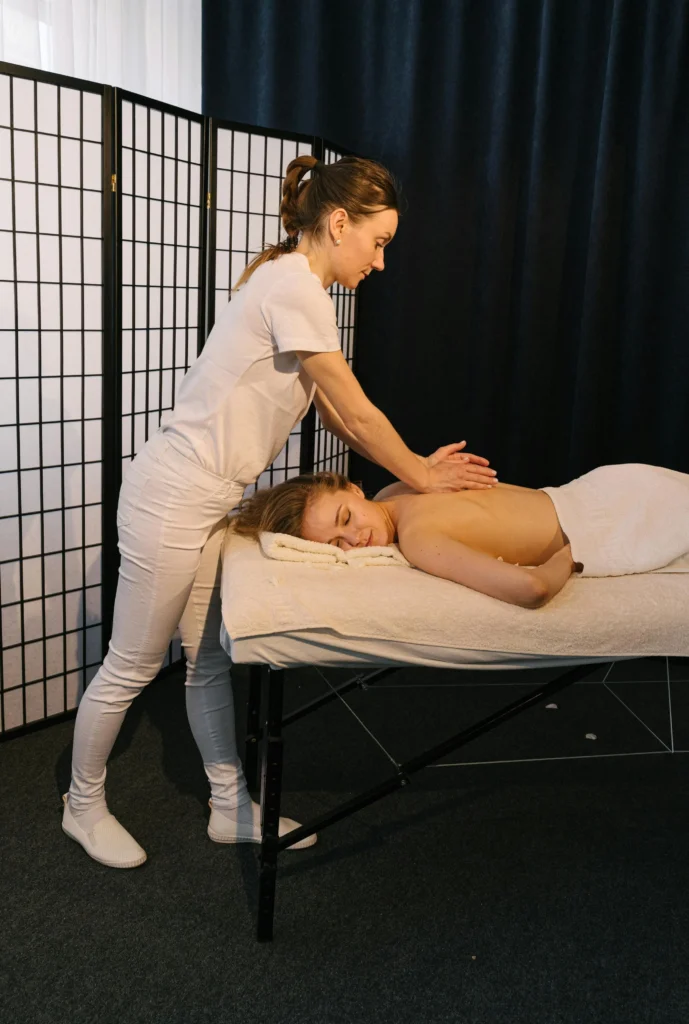
Myofascial release works the fascia — the continuous sheet of connective tissue wrapping every muscle, which tightens and loses glide over years of repeated posture. The technique looks almost static: the therapist sinks into the tissue with hands or forearms, engages the restricted layer, and then simply waits, holding a sustained low-force stretch for ninety seconds or longer until the tissue yields. Little or no oil is used, because grip on the skin is what transmits the stretch. It feels slower, stranger and far less forceful than conventional massage.
- Fascia, not the muscle
- Sustained holds, ninety seconds
- Low force, long duration
- Waiting, not pushing through
Why Book It At Home
Release that took ninety seconds to earn should not end in traffic.
Nothing Rushed
Fascia responds to patience, not scheduling. At home nobody is waiting for the room after you.
Movement After
New range holds best if you move gently afterwards. Driving immediately re-shortens exactly what was released.
Courses Get Completed
Fascial change builds across sessions. Home bookings make weekly attendance realistic rather than aspirational.
Sensations Land Privately
Release sometimes produces unexpected warmth or emotional response. That is easier in your own room than a clinic.
Who This Service Fits Best
People With Restriction Rather Than Pain
- Anyone who feels tight everywhere without anything hurting
- People whose deep tissue results never seem to last
- Clients whose stretching never produces lasting change
- Anyone with restriction that moved when treated locally
- Those with long-standing postural patterns rather than injuries
- People whose tightness returns within days repeatedly
People Who Prefer Low Force
- Anyone who finds deep tissue pressure genuinely unpleasant
- Clients whose muscles guard aggressively under firm pressure
- People sensitive to intensity but needing real change
- Anyone curious about a fundamentally different technique
- Those recovering energy who cannot tolerate deep work
- Clients wanting slow, deliberate work over intensity
Conditions It Helps With
Generalised Tightness Without Pain
Feeling restricted everywhere suits fascial work better than targeted pressure. Sustained holds address the sheet rather than individual muscles.
Long-Standing Postural Patterns
Years of the same posture shortens fascia across whole chains. Slow release reaches what stretching and pressure cannot.
Restriction After Old Injuries
Healed injuries leave fascial adhesions long afterwards. Low-force sustained work restores glide those areas quietly lost.
Tightness That Keeps Returning
Muscles release then re-tighten when the fascia around them stays restricted. Treating the wrapper changes that pattern.
Iliotibial Band And Lateral Chains
Dense fascial structures resist conventional pressure stubbornly. Sustained holds work where elbows only cause discomfort.
Guarded, Reactive Tissue
Bodies that brace against firm pressure respond to low force. Nothing here triggers a protective response.
What myofascial release does not do
01
It does not feel like massage
Sessions are slow and nearly static. Anyone wanting flowing strokes will find it strange.
Choose instead: Swedish massage
02
It does not diagnose anything
Therapists are not doctors. Persistent or unexplained pain needs proper medical assessment first.
See first: A qualified doctor
03
It does not work instantly
Fascial change accumulates across sessions. One visit rarely shifts a years-old pattern.
Plan for: A series of sessions
04
It does not replace movement
Fascia re-shortens without daily use. Sessions support movement rather than replacing it.
Required alongside: Daily movement
Pricing
- 60-Minute Release Session AED 310–410
Two or three regions, properly held.
- 90-Minute Release Session AED 350–450
Full chains worked, unhurried entirely.
- Back And Shoulders Focus AED 299–400
Thoracic and shoulder fascia prioritised.
- Hips And Lateral Chains AED 310–420
IT bands, glutes and hip fascia.
- Neck And Jaw Release AED 299–390
Gentle sustained work above the shoulders.
- Combined Release And Massage AED 330–440
Fascial holds with conventional work throughout.
- Weekly Programme Session AED 310–430
Same therapist, change tracked across weeks.
- Monthly Maintenance Session AED 299–420
Holding gains once the course finishes.
The Session, Step by Step
The Arrival
Therapist arrives with table, linens and everything else needed.
The Setup
Room chosen, table assembled, lighting lowered, warmth kept comfortably steady.
he Engagement
Hands sink into the tissue until the restricted layer is felt.
The Wait
Pressure holds steady for ninety seconds or longer without changing.
The Release
Tissue softens under the hands, and the hold follows it deeper.
The Chain
Work follows the restriction along the chain rather than staying local.
The Aftercare
Guidance on movement, hydration and what tomorrow should feel like.
The Assessment
Palpation and simple movement checks identify where glide has been lost.
Technique & Pressure Guide
This is the least forceful technique we offer and often the most effective for restriction. The therapist applies only enough pressure to engage the fascial layer — too much and the muscle beneath guards, blocking everything. Then nothing changes for ninety seconds or longer. Fascia is viscoelastic; it yields to sustained low load rather than force, which is why pushing harder achieves nothing. No oil is used, since skin grip is what transmits the stretch. Sessions feel unusually still compared to any other bodywork.
- Pressure engages the fascial layer only — more force makes muscle guard.
- Each hold lasts ninety seconds or longer without any change in pressure.
- Fascia yields to sustained low load rather than force, so patience outperforms intensity.
- No oil is used, since grip on skin transmits the sustained stretch.
- Work follows the restriction along chains rather than staying at one site.
Serving All of UAE
Find Us in Your Area
Aftercare & Frequency
First Hours
- Move gently around the house.
- Drink water generously through evening.
- Avoid heavy training tonight entirely.
- Notice how movement feels now.
Next Days
- Mild soreness occasionally appears briefly.
- Change often continues for days.
- Gentle movement consolidates the release.
- Note which restriction eased most.
Ongoing Rhythm
- Established patterns: weekly for six.
- Reassess progress at session six.
- Maintenance afterwards: every three weeks.
- Long-standing restriction: longer courses expected.
How to Book
01
Give the area, building or villa, and floor. First booking saves the access details permanently, so every future arrival lands correctly without repeated explanations or waiting downstairs.
02
Say The Pattern
Describe where you feel restricted rather than where it hurts. Fascial work follows restriction, and that distinction shapes the whole session.
03
Say When
Choose a weekly slot if starting a course. Same-day sessions are usually available, and confirmed times hold regardless of traffic.
04
Open The Door
Everything arrives with the therapist. The room needs nothing prepared, no space cleared beforehand, and payment settles afterwards by cash, card or instant link.
Frequently Asked Questions
Why does the therapist barely move during it?
Because fascia yields to sustained holds rather than movement — stillness is the technique itself.
How is this different from deep tissue massage?
Deep tissue uses force and movement. This uses low pressure held for long durations.
Does myofascial release hurt?
Rarely — pressure stays low. It can feel intense or strange, but not painful.
Is oil used during the session?
No — skin grip is what transmits the stretch, so oil would prevent it working.
How many sessions will I need?
Usually six to shift an established pattern, reassessed at that point together.
Will I feel different immediately afterwards?
Often yes, though the bigger change accumulates across several sessions rather than one.
Can it be combined with normal massage?
Yes — the combined session uses fascial holds alongside conventional work throughout.
Do the therapists hold proper professional licensing?
Every therapist holds valid DHA-recognised licensing under our registered Dubai establishment, presented on request.
Is it suitable after an injury?
Once fully healed and cleared, yes — acute injuries need medical care instead.
How quickly can someone reach my area tonight?
Usually within the hour across Dubai, depending on your area and current bookings.
Our Myofascial Release Specialists
Ziad Haddad
Lebanon · DHA-Licensed Massage Therapist
Focused on fascial work and chronic restriction. Patient with holds and precise at finding restricted layers.
Oleksandr Ivanchuk
Ukraine · DHA-Licensed Massage Therapist
Sports-background practitioner. Strong with lateral chains and the IT band restrictions runners accumulate.
Marivic Delgado
Philippines · DHA-Licensed Massage Therapist
Eight years including fascial technique. Reads guarding accurately and keeps pressure below the threshold.
Kanya Phromma
Thailand · DHA-Licensed Massage Therapist
Fifteen years of practice. Unhurried by nature, which suits a technique built entirely on waiting.
Book Myofascial Release At Home This Week
Licensed therapists, sustained low-force holds, and a technique that works by patience rather than pressure — delivered anywhere in Dubai, seven days a week, until late. One message books it, everything arrives with the therapist, and payment settles only after the session ends.