
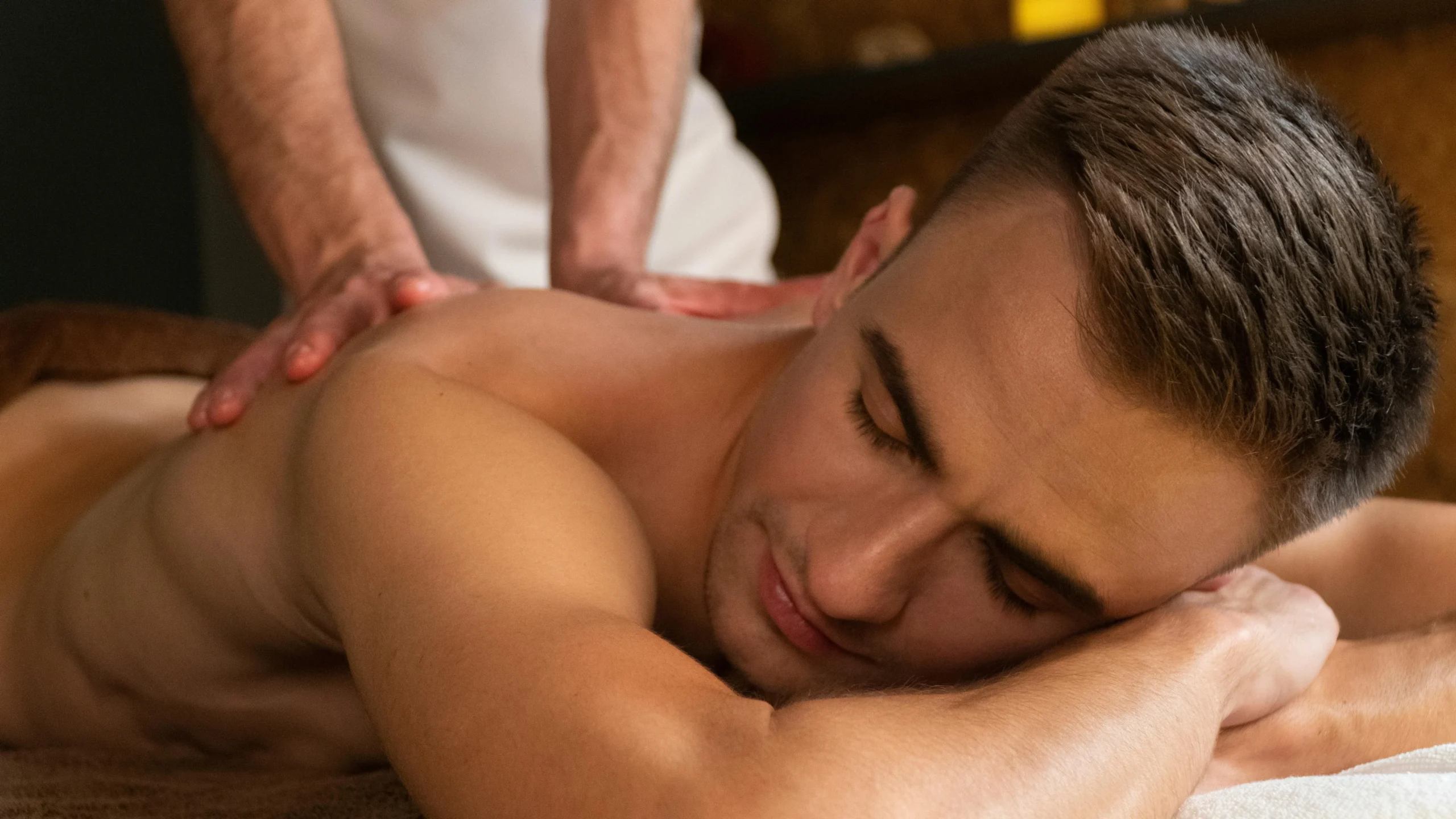
The DIFC Lawyer Who Couldn’t Sleep How 60 Days of Weekly Deep Tissue Massage Reversed 18 Months of Chronic Insomnia
The Starting PointWhen Tariq first messaged us on WhatsApp at 11:42 PM on a Tuesday in late February, his opening line was unusual: "I need someone who understands what 18 months of sleeping 3-4 hours a night does to a body."
Case Study: The DIFC Lawyer Who Couldn’t Sleep
How 60 Days of Weekly Deep Tissue Massage Reversed 18 Months of Chronic Insomnia
Client Profile: Tariq K. (name changed for privacy) Age: 43 Profession: Senior Partner at a Tier-1 law firm, DIFC Location: Apartment in Index Tower, DIFC Service Received: Deep Tissue Massage (Weekly sessions) Program Duration: 60 days / 9 sessions Investment: AED 2,700 total (booked as 2 months of 4-session membership)
The Starting Point
When Tariq first messaged us on WhatsApp at 11:42 PM on a Tuesday in late February, his opening line was unusual: “I need someone who understands what 18 months of sleeping 3-4 hours a night does to a body.”
His situation was specific. As a senior partner handling cross-border M&A transactions, his work day overlapped with three time zones — Asian markets from 6 AM, European clients mid-morning through afternoon, and US counterparts until nearly midnight. His body had stopped knowing when to shut down.
Symptoms at intake:
- Sleep averaging 3.5 hours per night for 18 months
- Wakes 4-5 times between 2 AM and 5 AM
- Locked trapezius muscles — he couldn’t fully rotate his head left
- Persistent upper back tension described as “wearing a tight backpack 24/7”
- Grinding his jaw at night (his dentist had just prescribed a night guard)
- Cardiologist flagged his blood pressure at 146/92 the week before
- Starting to experience memory lapses during meetings
- Wife sleeping in guest room for 6 months due to his restlessness
He had tried almost everything: CBT-I therapy, melatonin, magnesium glycinate, a Muse headband, two different sleep trackers, a weighted blanket, three cognitive sleep apps, and eventually prescription zolpidem. Nothing created lasting change. His words: “I can knock myself out for 5 hours with medication, but I wake up feeling like I’ve been in a car accident.”
Our Assessment (Session Zero Notes)
Before the first session, our lead therapist conducted a 20-minute intake. Several observations stood out:
Physical assessment:
- Cervical range of motion: Right rotation 55°, left rotation only 32° (normal: 80° each side)
- Upper trapezius: Palpable taut bands and active trigger points on both sides, left significantly worse
- Sub-occipital muscles: Severe tension at base of skull — this alone can cause tension headaches and disrupt sleep architecture
- Breathing pattern: Chest-dominant (diaphragm barely engaging) — classic chronic sympathetic nervous system activation
- Hand tremor: Slight, visible when holding a phone. Sign of sustained stress response.
What we noticed beyond the physical:
Tariq kept checking his phone during the intake — not anxiously, but reflexively, every 40-50 seconds. When asked the last time he felt truly relaxed, he paused for nearly 15 seconds before answering: “Probably before I made partner in 2018.”
This wasn’t a muscle problem. It was a nervous system stuck in fight-or-flight for six years.
The Protocol (Week-by-Week)
Week 1-2: Nervous System Reset (Sessions 1-3)
The first three sessions were NOT aggressive deep tissue work. Tariq expected “harder pressure = faster results.” We explained why this is a common misconception.
A nervous system that’s been in sympathetic overdrive for 6 years cannot suddenly accept deep pressure. The body perceives it as additional stress. Our approach:
- Session 1 (75 min): Swedish-dominant full body, medium pressure, focus on signaling safety to the nervous system. Paired with specific breathing protocol taught at the end.
- Session 2 (75 min): Introduced deeper work on trapezius and sub-occipital region — still not aggressive. Added heat therapy.
- Session 3 (90 min): Full deep tissue on upper back and neck. Significant trigger point work around C2-C3 region.
Home protocol given:
- 4-7-8 breathing: 4 minutes, 4 times daily (morning, mid-afternoon, before dinner, before bed)
- No screens after 10 PM (this was the hardest)
- Evening shower dropped to 3 minutes cold at the end
- Phone outside bedroom
Week 2 results tracked:
- Sleep average: 4.1 hours (up from 3.5)
- Night wakings: 3-4 (down from 4-5)
- Cervical rotation: Right 60°, Left 42°
- BP reading at home: 141/88
Week 3-4: Deep Tissue Phase Begins (Sessions 4-5)
Now the body was ready for proper deep tissue work.
- Session 4: Intensive trigger point therapy on left upper trapezius and rhomboids. Tariq described the referred pain pattern we triggered as “the exact headache I’ve been having for a year.”
- Session 5: Worked through masseter and temporalis muscles (jaw tension from grinding). Combined with sub-occipital release.
Week 4 results:
- Sleep average: 5.2 hours
- Night wakings: 2
- BP: 135/86
- Cervical rotation: Right 70°, Left 55°
- First night Tariq slept through without zolpidem in 14 months
Week 5-6: Sleep Architecture Work (Sessions 6-7)
With the acute physical tension reducing, the focus shifted to specific techniques that influence the vagus nerve and parasympathetic activation — critical for deep sleep phase.
- Prolonged cranial sacral holds
- Specific abdominal work to release diaphragmatic tension (diaphragm is heavily connected to vagal tone)
- Foot reflexology incorporated — specifically kidney, adrenal, and pineal gland points
Week 6 results (measured via his Apple Watch data):
- Sleep average: 6.1 hours
- Deep sleep percentage: 18% (up from 7%)
- REM sleep: 22% (up from 14%)
- Night wakings: 1-2
- BP: 128/82
- Wife moved back to the bedroom
Week 7-8: Maintenance & Integration (Sessions 8-9)
Final phase focused on teaching Tariq’s body to maintain the changes independently.
- Gentler sessions focused on integration rather than correction
- Extended stretching therapy components
- Specific self-massage tools taught (he invested in a Hypervolt and theragun)
- Transition plan to bi-weekly sessions post-program
Final Week 8 measurements:
- Sleep average: 6.8 hours
- Deep sleep: 22%
- REM: 24%
- Night wakings: 0-1
- BP: 124/79 (in normal range for first time in 3 years)
- Zolpidem: Zero use for 5 consecutive weeks
The Conversation That Mattered Most
In Session 7, Tariq said something that’s stayed with us:
“I thought I needed a better mattress, more supplements, stronger sleep medication. I thought my body was broken. What I actually needed was for someone to physically release 6 years of held tension — and for my nervous system to finally trust that it was safe to rest.”
What This Case Teaches
1. Deep Tissue Is Not Always “Deep” First Aggressive pressure on an overstressed nervous system can worsen symptoms. Proper sequencing matters more than intensity.
2. Consistency Beats Intensity 9 sessions over 60 days created changes that Tariq couldn’t achieve with daily medications, expensive supplements, or sporadic “luxury spa visits.”
3. Sleep Is a Whole-Body Problem His insomnia wasn’t a “sleep problem” in isolation — it was chronic physical tension, shallow breathing patterns, jaw clenching, vagal nerve suppression, and sustained sympathetic nervous system activation. Each layer needed addressing.
4. DIFC Professionals Need Specific Approaches Working with DIFC-based lawyers, bankers, and M&A professionals has taught us that the 24-hour timezone overlap creates a specific pattern of chronic dysregulation. Standard massage protocols aren’t enough.
5. Home-Based Delivery Matters for This Demographic Tariq said he would have cancelled at least 4 sessions if he had to commute to a spa. The fact that sessions happened in his apartment — often at 9 PM after his US calls ended — made consistency possible.
Investment Breakdown
- Program cost: AED 2,700 (2 months of 4-session membership at AED 1,620 + 1 extended session)
- Monthly cost during program: AED 1,350
- Sessions received: 9 total (1 included extra session)
- Additional savings: Stopped zolpidem (AED 280/month), cancelled Calm app subscription, reduced cardiologist visits
- Net cost after savings: Effectively AED 1,200-1,400 per month
For context — his hourly billing rate at his firm is AED 4,500. The total program cost equals 36 minutes of his billable time.
Current Status (Post-Program)
Six months after completing the intensive program, Tariq continues with bi-weekly maintenance sessions on our 4-session monthly plan. His sleep averages 6.5-7 hours. His BP has remained stable. His wife says his personality returned — she hadn’t realized how much of his “work stress” had become personality over the years.
He recently referred three DIFC colleagues to us. All three are now on regular programs.
Considering a Similar Program?
If you’re experiencing chronic sleep disturbance, sustained stress, or physical tension that no amount of occasional treatment seems to fix — we can help. Consistency over 6-8 weeks is what creates measurable change.
Book a consultation session via WhatsApp to discuss your specific situation: +971 56 857 1105
Related Services Mentioned in This Case Study
- Deep Tissue Massage Dubai – Primary service in this program
- Trigger Point Therapy – Used for specific muscle knots
- Reflexology Massage – Integrated for vagal tone
- Head, Neck & Shoulder Massage – Core focus area
Related Reading
- Monthly wellness memberships for Dubai professionals
- How home-based massage beats spa visits for consistency
- Understanding vagal tone and why it matters for sleep