
Every figure below includes travel, professional table, warmed oils, and fresh single-use linens. One card citywide — no area premiums, no setup charges.
Rehabilitation Massage Dubai
What Rehabilitation Massage Is
Rehabilitation massage is soft-tissue work that runs alongside clinical rehabilitation, not instead of it. Your doctor or physiotherapist leads the recovery; we handle the muscular side — releasing the compensation patterns that build while you favour an injured area, working around healed scar tissue, and maintaining the tissue quality your rehab exercises depend on. Sessions require medical clearance and work within whatever restrictions your clinician has set. It suits people weeks or months into recovery, not anyone in the acute phase immediately after injury.
- Support, never the lead
- Alongside physiotherapy and doctors
- Compensation patterns and scar tissue
- Clearance required before booking
Why Book It At Home
Recovery is the period when travelling to appointments is hardest.
Mobility Is Limited
Injured people struggle with parking, stairs and distance. Removing the journey removes the main barrier to consistency.
Rest Follows Treatment
Recovering tissue benefits from stillness afterwards. Lying down immediately beats driving with a freshly worked limb.
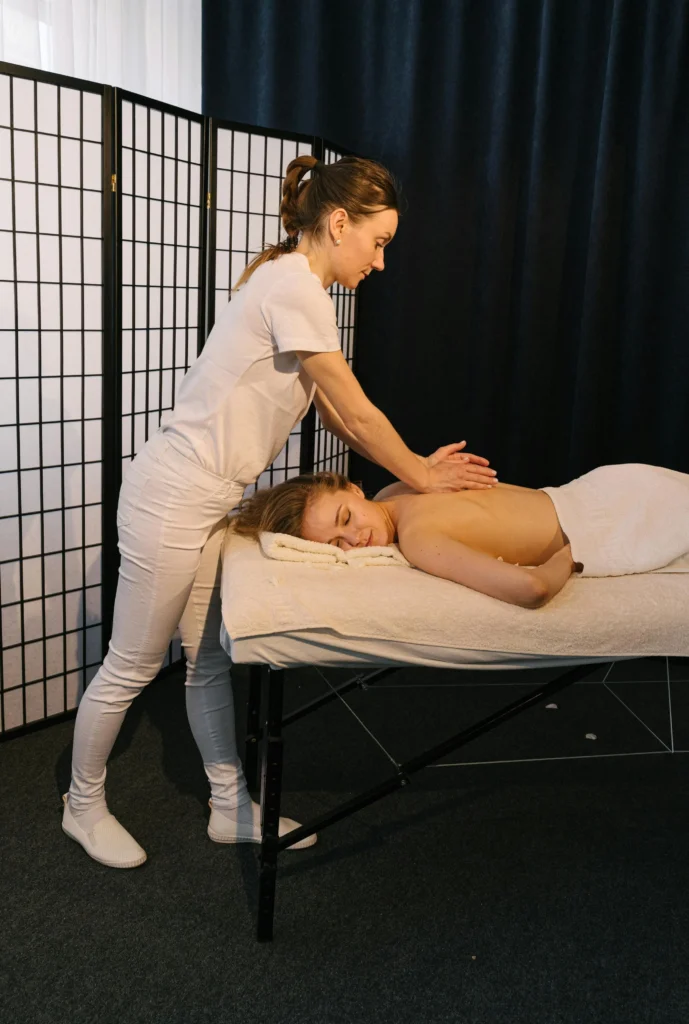
Programmes Get Completed
Recovery needs weeks of consistency. Home sessions mean the course finishes rather than lapsing after two visits.
Alongside Your Physio
Sessions slot between clinical appointments easily, keeping soft tissue in shape between the sessions that actually load it.
Who This Service Fits Best
People In Ongoing Recovery
- Anyone weeks into physiotherapy wanting soft-tissue support
- People with compensation patterns from favouring one side
- Clients with healed surgical scars restricting movement nearby
- Anyone whose uninjured side is now overworking badly
- People plateauing in rehab due to tissue tightness
- Those cleared by a clinician for massage
People Returning To Normal Activity
- Anyone rebuilding after months of reduced movement
- People returning to work after extended sick leave
- Athletes in the late stages of return-to-play
- Clients maintaining gains between physiotherapy appointments elsewhere
- Anyone whose injury healed but movement never fully returned
- People managing long-term stiffness after old injuries
Conditions It Helps With
Compensation Patterns
Favouring an injured side overloads the other one steadily. Releasing those chains prevents the second problem recovery often creates.
Healed Scar Tissue Restriction
Fully healed scars can restrict surrounding movement noticeably. Careful work around them restores glide once clearance is given.
Post-Immobilisation Stiffness
Weeks in a cast or sling leave surrounding tissue tight. Gradual release restores what immobility quietly took.
Protective Muscle Guarding
Bodies brace around old injuries long after healing completes. Warmth and gentle release settle guarding awareness alone cannot.
Reduced Range After Healing
Injuries heal while movement stays limited for months afterwards. Combined soft-tissue work supports what rehab exercises are building.
Overworked Supporting Muscles
Crutches, limps and altered gait overload arms, hips and backs. Those regions need treatment as much as the injury does.
What rehabilitation massage does not do
01
It does not lead your rehabilitation
Your doctor and physiotherapist direct recovery. We provide soft-tissue support within their plan.
Directed by: Doctor & physiotherapist
02
It does not treat acute injuries
Fresh injuries, swelling and unhealed tissue need medical care, never massage therapy.
See first: Medical care
03
Medical clearance is required
We ask before treating post-surgical or injured clients. That requirement is not negotiable.
Required first: Medical clearance
04
It does not replace exercise
Strength and loading rebuild function. Massage supports tissue quality; it cannot rebuild capacity.
Remember: Strength & loading rebuild function
Pricing
- 60-Minute Initial Session AED 310–410
History reviewed, restrictions mapped carefully.
- 60-Minute Support Session AED 299–400
Standard follow-up within your programme.
- 90-Minute Extended Session AED 350–450
Injury site plus full compensation chains.
- Compensation-Pattern Focus Session AED 310–420
The overworking side treated properly.
- Scar Tissue Work Session AED 310–420
Healed scars and surrounding tissue only.
- Weekly Programme Session AED 299–4300
Same therapist, tracked alongside physiotherapy.
- Post-Immobilisation Session AED 310–430
Gentle work after casts or slings.
- Monthly Maintenance Session AED 299–420
Holding gains once recovery completes.
The Session, Step by Step
The Arrival
Therapist arrives with table, linens, oils and everything else needed.
The Setup
Room chosen, table assembled, positioning adapted to your current restrictions.
The Clearance Check
Injury, surgery date, clinician's restrictions and what you've been told.
The Assessment
Gentle palpation identifies guarding, compensation and which areas remain sensitive.
The Safe Zones
Work begins well away from the injury, treating the compensating regions.
The Injury Area
Where cleared, careful graduated work approaches the site itself.
The Retest
Movement rechecked within whatever range your clinician has permitted.
The Aftercare
Guidance aligned with your physiotherapy rather than contradicting it anywhere.
Technique & Pressure Guide
Caution defines this work. Pressure starts well below what the tissue could probably tolerate and builds only across sessions, never within one. The compensating side usually gets treated before the injured side, because that region is often tighter and always safer. Scar work happens only on fully healed tissue and only with clearance. Therapists here ask what your physiotherapist has said and work inside those limits — contradicting a clinician’s plan would undo weeks of properly structured recovery.
- Pressure starts conservative and builds across sessions, never within a single one.
- Compensating regions are usually treated before the injured side itself.
- Scar work happens only on fully healed tissue with explicit clearance given.
- Therapists work inside your clinician's restrictions rather than around them.
- Any increase in pain stops the session and prompts a clinical referral.
Serving All of UAE
Find Us in Your Area
Aftercare & Frequency
First Hours
- Move only within permitted ranges.
- Apply warmth unless told otherwise.
- Rest rather than testing anything.
- Drink water steadily through evening.
Next Days
- Mild soreness is usually normal.
- Continue prescribed exercises as instructed.
- Report changes to your physiotherapist.
- Increasing pain means stopping immediately.
Ongoing Rhythm
- Active recovery: weekly alongside physiotherapy.
- Later stages: every two weeks.
- After discharge: monthly maintenance.
- Always follow your clinician's guidance.
How to Book
01
Give the area, building or villa, and floor. First booking saves the access details permanently, so every future arrival lands correctly without repeated explanations or waiting downstairs.
02
Say The Clinical History
Tell us the injury or surgery, how long ago, and exactly what your doctor or physiotherapist has permitted. We work inside those limits.
03
Say When
Choose a weekly slot alongside your physiotherapy schedule. Same-day sessions are usually available, and confirmed times hold regardless of traffic.
04
Open The Door
Everything arrives with the therapist, including positioning support for restricted movement. Payment settles afterwards by cash, card or instant link.
Frequently Asked Questions
Do I need medical clearance before booking?
Yes for any surgery or significant injury — that requirement protects your recovery, not our liability.
Does this replace my physiotherapy?
Never — physiotherapy leads recovery through loading and exercise. This supports the soft tissue alongside.
Can you work directly on my injury?
Only where cleared and fully healed. Otherwise we treat the compensating regions instead.
How soon after surgery can I book?
Only once your surgeon confirms the tissue has healed sufficiently — typically several weeks minimum.
Can massage help my surgical scar?
Once fully healed, careful work often restores glide in the surrounding tissue noticeably.
Will the therapist speak to my physiotherapist?
We follow whatever instructions you relay, and welcome written guidance from your clinician.
Is the pressure gentle throughout?
Conservative initially, building across sessions — never within one, and never beyond permitted limits.
Do the therapists hold proper professional licensing?
Every therapist holds valid DHA-recognised licensing under our registered Dubai establishment, presented on request.
What if my pain increases during a session?
The session stops immediately and we refer you back to your clinician.
How quickly can someone reach my area?
Usually within the hour across Dubai, depending on your area and current bookings.
Our Rehabilitation Support Specialists
Ziad Haddad
Lebanon · DHA-Licensed Massage Therapist
Focused on post-injury cases. Cautious, methodical and unusually clear about the boundary between support and treatment.
Oleksandr Ivanchuk
Ukraine · DHA-Licensed Massage Therapist
Sports-background practitioner. Strong with return-to-play compensation patterns in the later recovery stages.
Marivic Delgado
Philippines · DHA-Licensed Massage Therapist
Eight years working alongside physiotherapy referrals. Careful with restrictions and precise with graduated pressure.
Kanya Phromma
Thailand · DHA-Licensed Massage Therapist
Fifteen years of practice including post-immobilisation work. Patient, gentle and consistently within permitted limits.
Book Rehabilitation Massage Support At Home
Licensed therapists working inside your clinician’s restrictions, treating the compensation patterns recovery quietly builds — delivered anywhere in Dubai, seven days a week. One message books it, everything arrives with the therapist, and payment settles only after the session ends properly.